
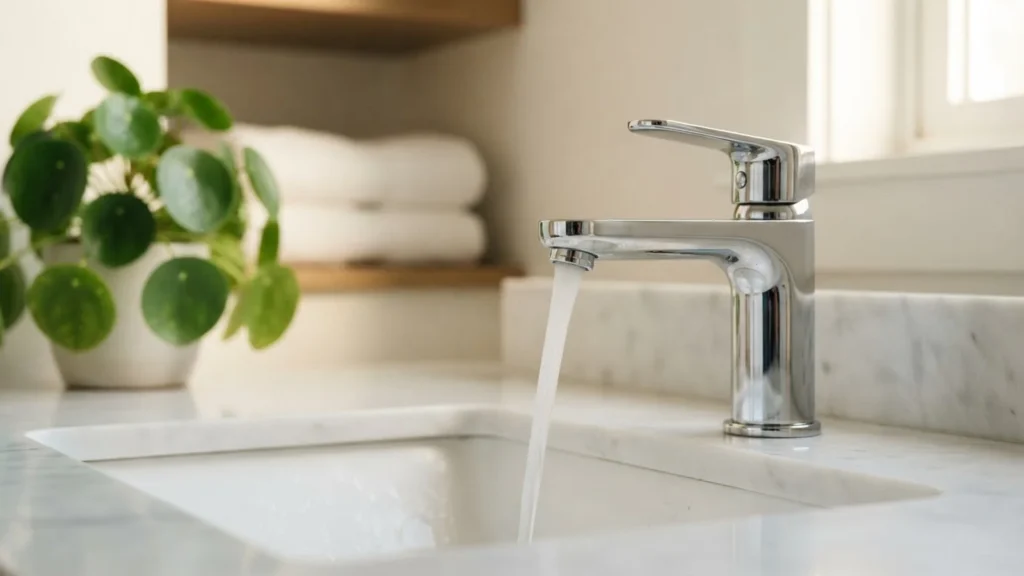
Most people think saving water means shorter showers and turning off the tap while brushing your teeth. That helps, sure. But the water a home wastes most is the water you never see: a silent toilet leak, a faucet dripping all night or an old showerhead that pours out far more than you need.
The good news is that finding that waste takes minutes, and fixing it usually costs little. This guide goes in order: first what’s free, then cheap upgrades and finally the purchases that are actually worth it. All data comes from WaterSense, the U.S. EPA’s water efficiency program.
First, understand where the water goes
According to the EPA, the bathroom accounts for more than half of the water we use indoors. Three things stand out:
- The toilet: one of the biggest users; the EPA estimates it accounts for nearly 30% of indoor water use.
- The shower: close to 20% of indoor use, also according to the EPA.
- Leaks: the EPA estimates that an average household’s leaks waste nearly 10,000 gallons a year, and that one in ten homes has leaks wasting 90 gallons or more a day.
Translation: if you want to see a difference on your bill, the bathroom and leaks are where to start.
Step 1: hunt for leaks (10 minutes, zero cost)
The toilet dye test. Put a few drops of food coloring in the tank, don’t touch anything and wait 10 minutes. If color shows up in the bowl without flushing, you have a leak. It’s the test the EPA itself recommends. When you’re done, flush so it doesn’t stain.
In most cases, the culprit is the flapper, the rubber piece that seals the tank. Over the years it warps and lets water through all day. The EPA explains that a worn flapper can make a toilet run on its own or silently waste thousands of gallons a year, and that replacing it is a quick, cheap fix.
The water meter. Turn off every tap in the house and check the meter. Look again in an hour or two without using water. If it moved, there’s a leak somewhere.
Dripping faucets and showerheads. Check under the sinks and around faucet bases. Often all it takes is tightening a connection or replacing a washer.
The EPA estimates that fixing easy household leaks can cut your water bill by about 10%. It’s the cheapest saving you’ll find.
Step 2: habits that actually show
- Shorter showers. Every minute less under a standard 2.5 gallon-per-minute showerhead is 2.5 gallons you don’t pay for, and since it’s hot water, you also save on gas or electricity.
- Run the washer and dishwasher only when full. That way you make the most of every cycle instead of repeating it.
- Don’t use the toilet as a trash can. Every unnecessary flush is clean water down the drain.
Step 3: cheap upgrades that pay for themselves
Faucet aerators. It’s the best-value purchase in the whole house. They screw onto the tip of the faucet in a couple of minutes, no tools needed. According to the EPA, WaterSense labeled faucets and aerators are about 30% more efficient than standard ones while still delivering good flow.
A WaterSense showerhead. Certified showerheads use no more than 2.0 gallons per minute, 20% less than the 2.5 federal limit, and the EPA estimates the average family can save about 2,700 gallons a year with them. The label also requires good performance, so you don’t have to settle for a trickle.
Down the road: a WaterSense toilet. If your toilet is very old, it may use 3.5 to 7 gallons per flush, according to the EPA. WaterSense labeled models use at least 20% less water than today’s standard 1.6-gallon toilet and perform as well or better. It’s not an impulse buy, but if you need to replace it, choose a certified one.
What we recommend buying
These are the top products from our comparison of WaterSense low-flow showerheads. There you’ll find the full review of each, with pros, cons and who they’re not for.
This guide contains Amazon affiliate links: if you buy through them, we earn a small commission at no extra cost to you. Approximate prices checked in November 2026. Learn more.
Neoperl Perlator 1.5 GPM aerators (6-pack): your first purchase

They bring faucet flow down to 1.5 gallons per minute, are WaterSense certified and a six-pack covers nearly every sink in the house. Their limitation: they don’t fit faucets with hidden aerators or small sizes. Check price on Amazon · Read the full review.
High Sierra Classic 1.5 GPM: the showerhead that feels like a normal shower
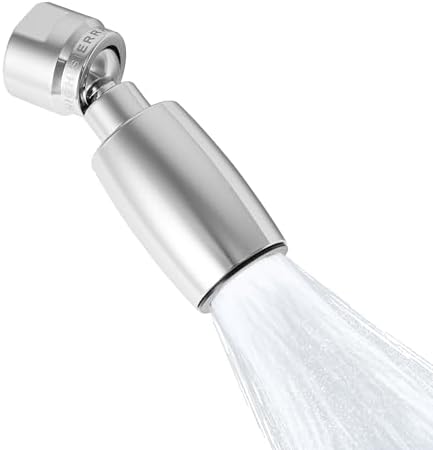
WaterSense certified, made of metal and with a large-droplet spray that feels firm at just 1.5 gallons per minute. It’s the most expensive fixed showerhead we compared and has only one spray pattern. Check price on Amazon · Read the full review.
Niagara Earth Spa N2915: the budget pick

The cheapest WaterSense showerhead in our comparison, with a pressure compensator for homes where water pressure is uneven. It’s plastic and has a small head. Check price on Amazon · Read the full review.
Frequently asked questions
Where do I start if I only have one afternoon?
Do the dye test on every toilet, check the meter and swap the bathroom faucet aerators. That tackles leaks and faucet use in a couple of hours.
How do I know a product really saves water?
Look for the WaterSense label on the packaging or product listing. It’s awarded by an independent certifying body after testing water use and performance. If in doubt, look up the brand and model in the EPA’s official WaterSense product search.
I live outside the United States. Does this guide still apply?
Yes. Leaks, habits and the logic behind efficient aerators and showerheads work the same in any home. What changes is availability: before buying on Amazon.com, confirm it ships to your country and check shipping and import costs.
The bottom line
Order matters: first find and fix leaks, which is free and can cut your bill by about 10%. Then swap the aerators, which cost little and save at every faucet. And when you’re ready for the next step, choose a WaterSense showerhead. To compare models at your own pace, our WaterSense showerhead review covers the four options we analyzed.
Transparency: Havitable is a participant in the Amazon Associates Program. If you buy through our links, Amazon pays us a small commission at no extra cost to you. As an Amazon Associate, we earn from qualifying purchases. That doesn’t buy our opinion: only products with a certification you can verify make the cut, and we also tell you what we don’t like.
Looking for a gift for the home? See our sustainable home gift guide: 11 certified ideas, sorted by budget.
Sources
- EPA WaterSense, Fix a Leak Week (household leaks, dye test and flapper): https://www.epa.gov/watersense/fix-leak-week
- EPA, 16th annual Fix a Leak Week release (leaks can add up to 10% to your bill): https://www.epa.gov/node/288682
- EPA WaterSense, toilets account for nearly 30% of indoor water use: https://www.epa.gov/node/281813
- EPA WaterSense, statistics and facts (bathroom, leaks and aerators): https://www.epa.gov/node/155463
- EPA WaterSense, Showerheads: https://www.epa.gov/watersense/showerheads
- EPA WaterSense, Bathroom Faucets: https://www.epa.gov/watersense/bathroom-faucets
- EPA WaterSense, Residential Toilets: https://www.epa.gov/watersense/residential-toilets
- EPA, Indoor Water Use in the United States (older toilets use 3.5 to 7 gallons): https://archive.epa.gov/greenbu3/greenbuilding/web/pdf/ws_indoor508.pdf
- EPA, WaterSense product search: https://www.epa.gov/watersense/product-search