
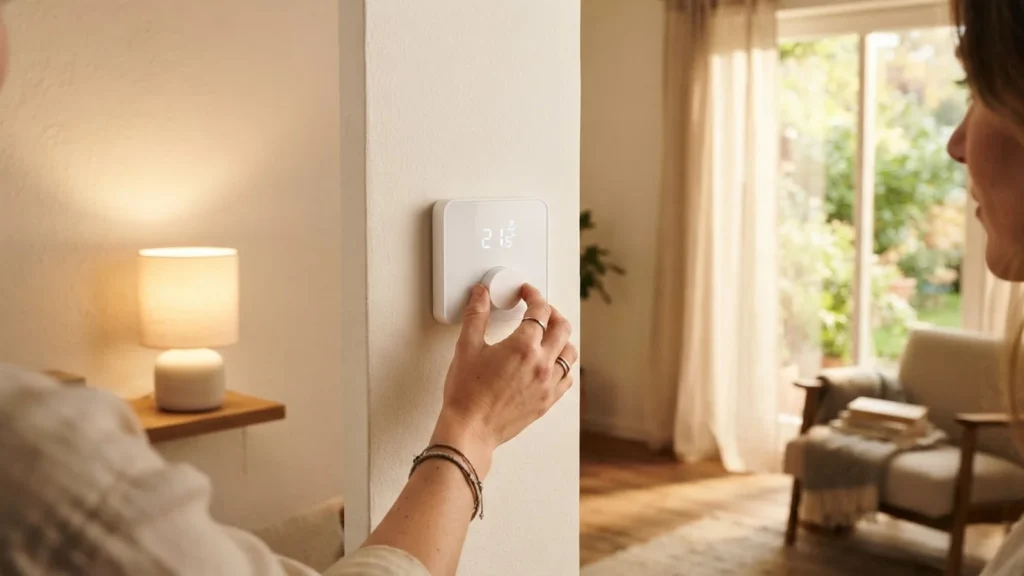
When a higher-than-usual power or gas bill shows up, the first thing we think of is turning off lights. That’s fine, but it’s rarely where the money goes. In most homes, what weighs most is keeping the temperature comfortable: heating in winter, cooling in summer and heating water for the shower.
This guide goes from free to the things that take an investment, so you know what to do first. The data comes from the U.S. Department of Energy (DOE) and ENERGY STAR, the EPA’s energy efficiency program.
First, understand where the energy goes
According to ENERGY STAR, heating and cooling take almost half of the average household’s annual energy bill: more than $900 a year. The water heater is another big user; the Department of Energy estimates it can account for 14% to 25% of a home’s energy. Lighting, by contrast, is about 15% of an average home’s electricity use, also according to the DOE.
The takeaway is simple: if you want real savings, start with the thermostat and hot water.
Step 1: free tweaks that show up on your bill
Adjust the thermostat when you’re away or asleep. The Department of Energy estimates you can save up to 10% a year on heating and cooling just by turning your thermostat back 7 to 10°F for 8 hours a day from its normal setting. In winter, that means lowering it while you sleep or are out; in summer, raising it.
Turn down the water heater. ENERGY STAR recommends setting it to 120°F. It explains that many ship from the factory at 140°F, which wastes energy through standby heat loss and also raises the risk of scalding.
Use the sun. ENERGY STAR suggests opening the curtains during the day in cold weather to take advantage of the sun’s warmth, and closing them in hot weather.
Step 2: seal the air leaks
Warm or cool air escaping through gaps around doors, windows and the attic is money out the window. The EPA estimates that sealing air leaks and insulating the attic can save an average of 15% on heating and cooling, or 11% of your total energy bill. To start, check door and window frames: if you feel a draft, a bit of weatherstripping or caulk goes a long way.
Step 3: cheap upgrades
LED bulbs. According to the Department of Energy, residential LEDs, especially ENERGY STAR certified ones, use at least 75% less energy and last up to 25 times longer than incandescent bulbs. The DOE estimates the average household saves about $225 a year in energy costs by using LED lighting. If you still have old bulbs, start with the ones that are on the most hours.
An efficient showerhead. Every gallon of hot water you don’t use is also energy you don’t pay for. A WaterSense showerhead reduces the hot water in every shower; our comparison of WaterSense showerheads covers the models we analyzed.
Step 4: the investment that pays off most, a smart thermostat
The tweak in step 1 works, but it depends on you remembering every day. A smart thermostat does it for you: it lowers the temperature when nobody’s home, brings it back before you arrive and lets you control it from your phone. ENERGY STAR estimates a certified thermostat saves about 8% of what you spend on heating and cooling, around $50 a year, and more if your bills are high.
An important heads-up for readers in Mexico and the rest of Latin America: these thermostats work with central heating and cooling systems that use a low-voltage (24 V) wall thermostat, the most common kind in the United States. If your AC is a mini-split with a remote control, they won’t work for you.
What we recommend buying
These are the top ENERGY STAR certified thermostats from our comparison of smart thermostats. There you’ll find the full review of each, with pros, cons and compatibility.
This guide contains Amazon affiliate links: if you buy through them, we earn a small commission at no extra cost to you. Approximate prices checked in November 2026. Learn more.
Google Nest Thermostat: the easiest install in homes without a C-wire

According to Google, it works without a C-wire in most homes, and it has the best-documented savings: two independent studies found 10% to 12% on heating and about 15% on cooling. It’s built for the Google ecosystem and doesn’t learn your schedule on its own. Check price on Amazon · Read the full review.
Amazon Smart Thermostat: the cheapest if you already use Alexa
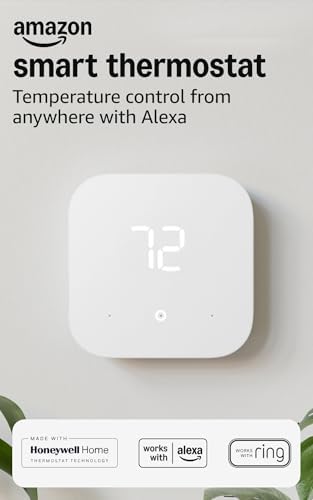
ENERGY STAR certified, developed with Resideo (Honeywell Home) and the lowest price in our comparison. It needs a C-wire or an adapter kit and only works with Alexa. Check price on Amazon · Read the full review.
Sensi ST55: the all-rounder for homes with older wiring

According to the manufacturer, it doesn’t need a C-wire in most installations and works with Alexa, Google Assistant, SmartThings and Apple Home (the latter with a C-wire). Its design is basic, with no color touchscreen. Check price on Amazon · Read the full review.
Frequently asked questions
What should I do first to see results this month?
Adjust the thermostat when you sleep or go out and turn the water heater down to 120°F. They’re two free changes that target the two biggest energy users in the house.
Is a smart thermostat worth it if I already have a programmable one?
If you really use your programmable thermostat’s schedules, the extra savings will be smaller. A smart one wins when the programmable is left at a single temperature all day, which is the most common case.
How do I know if an appliance is efficient?
Look for the ENERGY STAR label. It means the product meets EPA efficiency criteria and, for thermostats, that the manufacturer proved savings with data from real users. Plus, many U.S. utilities offer rebates only for certified products.
The bottom line
Tackle what uses the most first: home temperature and hot water. Adjust the thermostat and the water heater today, seal air leaks and switch the bulbs you use most to LED. When you want to put savings on autopilot, an ENERGY STAR certified thermostat does the work for you; our smart thermostat review compares four models so you can pick the one that fits your home.
Transparency: Havitable is a participant in the Amazon Associates Program. If you buy through our links, Amazon pays us a small commission at no extra cost to you. As an Amazon Associate, we earn from qualifying purchases. That doesn’t buy our opinion: only products with a certification you can verify make the cut, and we also tell you what we don’t like.
Looking for a gift for the home? See our sustainable home gift guide: 11 certified ideas, sorted by budget.
Sources
- ENERGY STAR, How to Save Energy at Home (heating and cooling, 120°F water heater, air sealing, curtains): https://energystar.gov/sites/default/files/2024-04/ES_How_to_Save_Energy_at_Home_Web.pdf
- U.S. Department of Energy, Energy Saver: Thermostats (up to 10% savings by turning back 7-10°F for 8 hours): https://www.energy.gov/energysaver/thermostats
- U.S. Department of Energy, Water Heating (14% to 25% of home energy use): https://www.energy.gov/node/848051
- U.S. Department of Energy, LED Lighting: https://www.energy.gov/energysaver/articles/led-lighting
- U.S. Department of Energy, Lighting (15% of electricity use and $225 a year with LEDs): https://www.energy.gov/lighting
- ENERGY STAR, Smart Thermostats: https://www.energystar.gov/products/smart_thermostats
- Google Nest, Explaining Nest thermostat savings: https://support.google.com/googlenest/answer/9247497
- Sensi, ENERGY STAR certification and compatibility: https://sensi.emerson.com/en-us/blog/sensi-smart-thermostats-earn-energy-star-certification